SEC Proposes Four Cuts to Its Proxy Rules, a Fifth It Does Not List, and One New Requirement
The Commission puts the package at approximately $7.7 million a year in benefits against approximately $450,000 a year in costs, and none of it is in force.
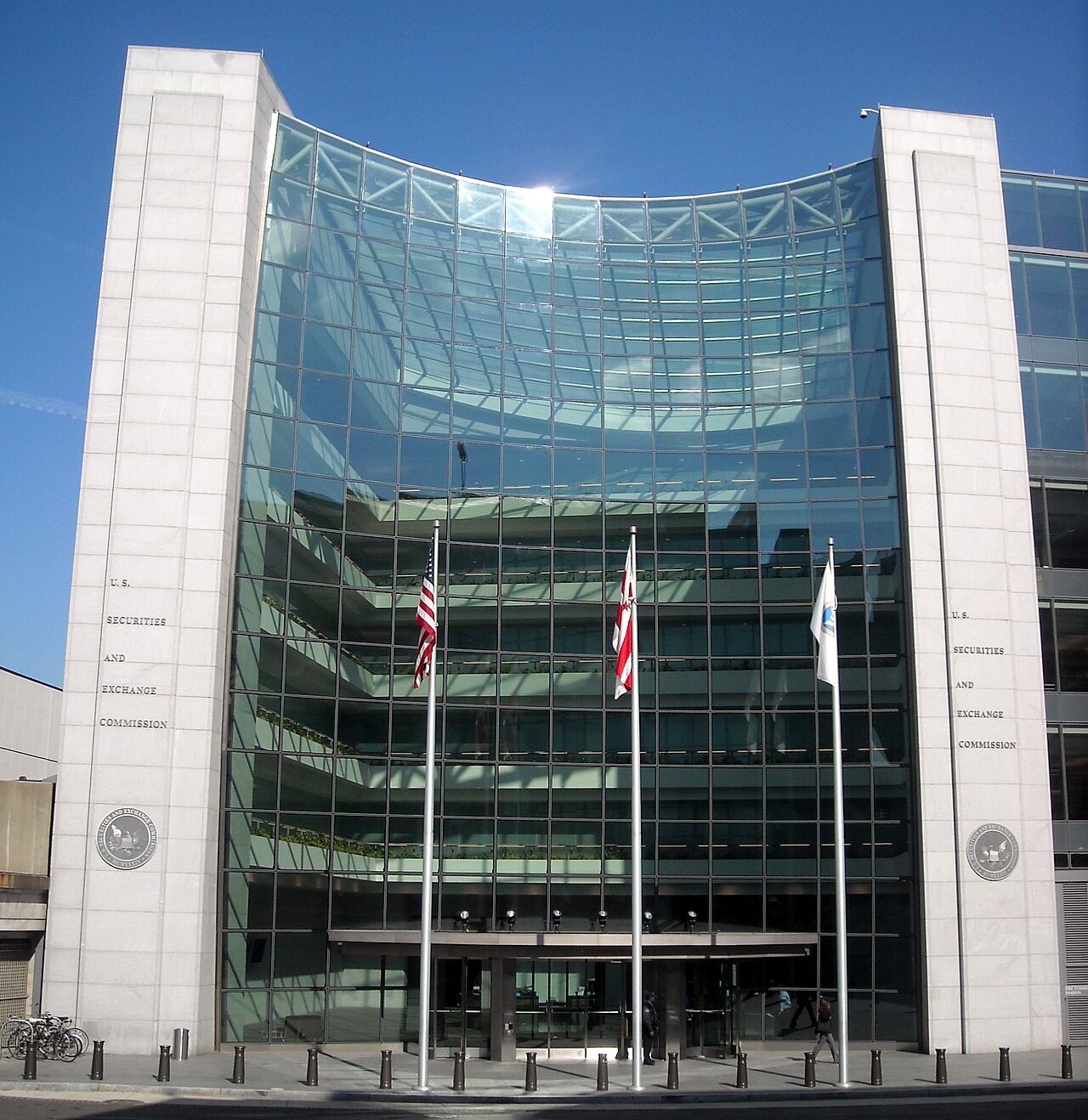
The Securities and Exchange Commission voted on 16 September 2026 to propose amendments to the rules that govern how companies solicit proxies, and the proposal was published in the Federal Register on 21 September 2026 at 91 FR 59852, a 50-page release. Comments on File No. S7-2026-33 are due on or before 20 November 2026.
The release lists five changes:
- Eliminate the Rule 14a-3(b) requirement that a company deliver an annual report to security holders
- Eliminate the requirement to send a proxy statement at least 20 business days before the meeting where it incorporates information by reference, under Note D.3 of Schedule 14A and General Instruction A.2 to Forms S-4 and F-4
- Eliminate the Rule 14a-6(g) Notice of Exempt Solicitation, submitted on EDGAR under form type PX14A6G
- Reduce the Rule 14a-13 minimum broker search period from 20 business days to five business days
- Require contact information on the cover pages of proxy and information statements
The arithmetic the Commission published
"We estimate that the total aggregate annual monetized benefit is approximately $7.7 million and the total aggregate annual monetized cost is approximately $450,000," the release says in section IV.B.7. Annualised, it puts benefits at approximately $7.7 million a year and costs at approximately $445,000 a year, at both a 3 percent and a 7 percent discount rate.
The largest single saving is the annual report. Registrants submitted 3,157 annual reports to security holders in 2025. The Commission assumes 90 percent of them would instead rely on a Form 10-K already on file, which puts 2,841 respondents in line to avoid roughly $3.5 million in compliance costs, at approximately $1,237.50 an annual report. Ending the Notice of Exempt Solicitation is costed at approximately $280,000 a year, on an assumed 286 submissions a year, the 2025 figure; approximately 80 percent of the 2025 submissions were voluntary, made by filers holding $5 million or less of that class.
One new cost, and one quiet subtraction
Against all of that sits one new charge. Putting contact information on cover pages is estimated at approximately $63 a filing, a $62.50 figure derived from 0.10 added burden hours at a $625 blended hourly rate, across approximately 6,111 filings a year, 5,757 on Schedule 14A and 354 on Schedule 14C. That comes to approximately $380,000 a year, and it is the largest cost the release monetizes.
A sixth change sits in the release without being listed among the five. Section II.A.2 would drop the Item 201(e) stock performance graph for every registrant other than investment companies, keeping it only for business development companies and face-amount certificate companies and moving it into the Form 10-K. Dropping it is estimated to cut aggregate compliance costs by $3.9 million; retaining it for the rest is costed at approximately $64,000, covering an estimated 51 business development companies and no face-amount certificate companies.
"Eliminating duplicative or outdated requirements reduces unnecessary compliance costs for issuers and intermediaries." — Commissioner Mark Uyeda, statement of 16 September 2026
Who sits on the other side of the search
The broker search period is the change with an identifiable loser. The period was set at 20 calendar days in 1983 and lengthened to 20 business days in 1986; the release says that "we understand that the broker search can now often be completed in as few as three days." Cutting the minimum to five reaches securities lending. The Commission estimates 614 introducing broker-dealers originated short-sale trades in equities in 2025, and acknowledges that a share lender who learns of a record date through the search would have five business days rather than up to 20 to recall loaned shares and vote them.
By the Commission's own count as of 31 December 2025, 5,357 companies had a class of securities registered under section 12, including 142 business development companies, and 4,527 of them, or 85 percent, filed proxy materials in calendar 2025. A further 2,720 registered investment companies are subject to the federal proxy rules, of which 816 filed in 2025. On the exempt solicitation side, 311 unique filers submitted 3,376 notices between 1997 and 2025 concerning 751 registrants, and a study of the 1997 to 2019 submissions cited in the release found filers were mostly public pension funds (38.1 percent), union funds (24.9 percent) and hedge funds and institutional investors (22.5 percent).
The proposal it travels with
The Commission proposed on the same day to rescind Rule 14a-8, the shareholder proposal rule. The two are formally separate filings, with different release and file numbers and separate Federal Register documents. In practice they are joined: one press release announced both, a single Chairman's statement covered them, and both comment periods close on 20 November 2026. This release names the other six times, calls it the Rule 14a-8 Proposal, and gives a section of its economic analysis to the interaction, saying the net effect on the volume of exempt solicitation activity is uncertain and that the available data do not allow it to be quantified with confidence. The same passage says the shortened broker search could compound the separately proposed Rule 14a-4(c) amendment in reducing the likelihood of success of shareholder campaigns. The rule text here does not reflect those amendments, because neither proposal has been adopted.
What is not settled
No commissioner has gone on record against the proposal, and the structure explains why. Three statements were issued on 16 September 2026, by the Chairman and by Commissioners Hester Peirce and Mark Uyeda, all supportive. The Commission has five seats and three sitting members, with two unfilled. No vote tally appears in the Federal Register notice or the press release.
Nothing described here is law. Rule 14a-3(b), the 20-business-day broker search, the Notice of Exempt Solicitation, the Note D.3 delivery deadline and the performance graph all still apply, and there is no cover-page contact requirement. One related thing is already operating: a January 2026 Division of Corporation Finance interpretation under which staff will object to voluntary Notices of Exempt Solicitation, after which the release says approximately five voluntary notices have been submitted. The release states that staff positions are not Commission rules and have no legal force or effect.
The release carries 35 numbered requests for comment. It does not quantify what the shorter broker search would cost share lenders, pension funds or institutional investors, calling it a possible cost and asking for data. It puts no monetized figure on ending the incorporation-by-reference deadline, which is therefore not inside the $7.7 million. And whether a final rule would be a major rule under the Congressional Review Act is undetermined, a call the Commission says rests with the Office of Management and Budget.
More from Markets

UBS's Chief Executive Says the Calm in Markets Is the Thing to Worry About
Sergio Ermotti argues that volatility should be considerably higher given the state of the world, and that new risks keep arriving before old ones…

Brent Gained Nearly Seven Per Cent After the Houthis Took a Port Fifty Miles From Bab el-Mandeb
Stocks fell and ten-year yields topped 4.96 per cent while the European Central Bank raised rates on the same day, citing the war as continuing…
JPMorgan Has Upgraded Meta to Buy and Forecast Negative Free Cash Flow of 65 to 75 Billion
The bank sees roughly 30 per cent upside on the back of Meta's new AI agent, while modelling two consecutive years of cash burn on the infrastructure…