UBS's Chief Executive Says the Calm in Markets Is the Thing to Worry About
Sergio Ermotti argues that volatility should be considerably higher given the state of the world, and that new risks keep arriving before old ones are resolved.
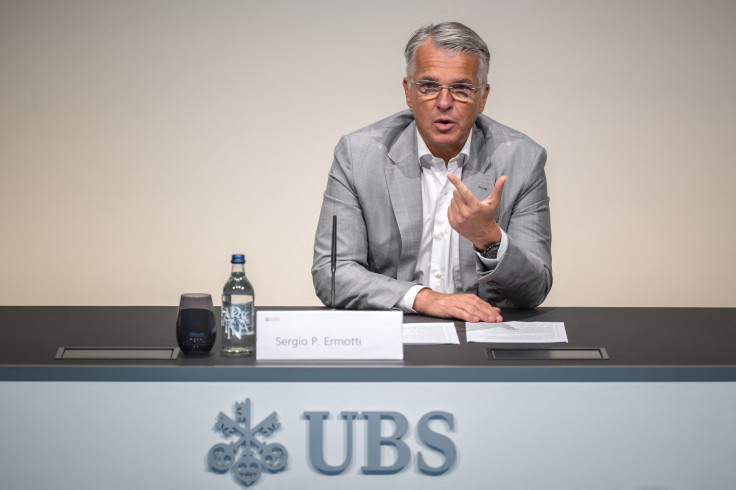
Sergio Ermotti, chief executive of UBS, has warned that financial markets have grown complacent, and that recent stability bears no sensible relationship to the number of risks in the global economy.
"There has been a level of complacency in financial markets in the last few years," he said on Thursday. Given the economic and geopolitical environment, he would have expected considerably higher volatility than markets have actually delivered.
What is holding it up
The immediate explanation is not mysterious. Investment in artificial intelligence, data centres and adjacent technologies has supported economic activity and asset prices through several periods that might otherwise have produced a correction.
Ermotti's concern is what that support is obscuring, and he puts it in one sentence.
"New problems or new issues are emerging without any of the old ones being addressed or being closed."
That is the specific mechanism of complacency. Each risk that fails to detonate gets quietly reclassified as background, and the next one arrives on top of it rather than instead of it.
It's quite difficult in this environment and not really advisable to have too many strong convictions
The stack of unresolved risks
The list he points to is not speculative.
The wars involving Iran and Ukraine have disrupted energy markets and shipping. Tensions between the United States and China continue to put pressure on global supply chains. Inflation and higher borrowing costs are squeezing households, companies and investors simultaneously.
None of those has been resolved. All of them are being priced, on current evidence, as though they have been absorbed.
How wealthy clients are responding
The behaviour of UBS's clients is the more interesting data, because it shows what people do when they cannot form a view.
They have been diversifying rather than taking large positions, spreading investments across sectors and regions over recent quarters while maintaining exposure to AI and technology.
Ermotti's framing of why is unusually candid for a bank chief executive. "It's quite difficult in this environment and not really advisable to have too many strong convictions," he said.
That is diversification as an admission rather than a strategy: the portfolio of someone who has concluded that confident forecasting is not currently available.
It is also, notably, not defensive. Spreading across sectors and regions while holding onto AI and technology exposure is not the allocation of an investor who expects a fall. It is the allocation of one who cannot identify where a fall would come from, and would rather not be concentrated when it does.
What has not happened
Two things Ermotti explicitly rules out are worth recording, because both have been widely asserted.
Overall client asset allocation has not changed significantly over the past year. And the bank has seen no evidence of a broad move away from American assets or the dollar.
Some client money did shift into global emerging markets about a year ago. Ermotti says those flows largely reflected investors deploying excess cash rather than selling existing US holdings or cutting dollar exposure.
"It was more how excess cash was deployed rather than people back trading from the U.S. or from the dollar, so I think that narrative has abated," he said, describing the dollar as continuing to serve as a reference currency.
The rates call
On borrowing costs, his expectation runs against the hopeful consensus.
Ermotti expects rates to remain elevated, and anticipates further increases from major central banks in the coming months as they continue dealing with inflation.
Put alongside the rest, that is the argument in full. Risks accumulating, convictions unavailable, rates going up rather than down, and a market pricing all of it as though the weather has cleared.
More from Markets
Brent Gained Nearly Seven Per Cent After the Houthis Took a Port Fifty Miles From Bab el-Mandeb
Stocks fell and ten-year yields topped 4.96 per cent while the European Central Bank raised rates on the same day, citing the war as continuing…
JPMorgan Has Upgraded Meta to Buy and Forecast Negative Free Cash Flow of 65 to 75 Billion
The bank sees roughly 30 per cent upside on the back of Meta's new AI agent, while modelling two consecutive years of cash burn on the infrastructure…

TSMC Now Holds 72.5 Per Cent of the Global Foundry Market, and August Was Its Best Month Ever
Revenue rose 53.3 per cent year on year while its nearest competitor holds under six per cent of a market on which the entire AI buildout now depends.