JPMorgan Has Upgraded Meta to Buy and Forecast Negative Free Cash Flow of 65 to 75 Billion
The bank sees roughly 30 per cent upside on the back of Meta's new AI agent, while modelling two consecutive years of cash burn on the infrastructure needed to run it.
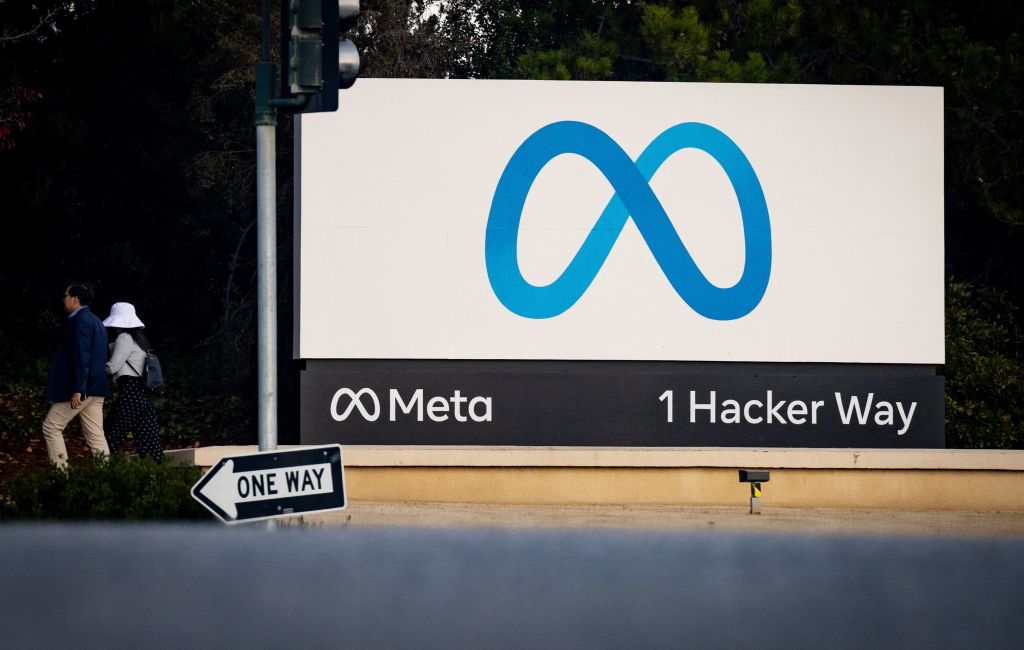
JPMorgan upgraded Meta Platforms to buy from neutral in a note on Thursday, raising its price target to 820 dollars. That implies roughly 30 per cent upside from Wednesday's close.
The upgrade rests on a bet that Meta's expansion into artificial intelligence opens businesses beyond advertising. The same note forecasts that paying for it will put unprecedented pressure on the company's cash flow.
What prompted it
The trigger was a run of product announcements, chief among them the Tuesday launch of Muse, Meta's personal AI agent app, built on its Muse Spark family of models. The latest version of the underlying model was released the week before.
Analyst Doug Anmuth treats those as the opening of a much wider strategy.
"We believe there's still meaningful upside potential as Meta is in the early stages of releasing frontier models and AI-driven products beyond advertising, notably Muse AI agent and Meta Model API access," he wrote.
The early consumer numbers appear to have moved him. Muse reached number three in the US App Store on its second day, and early usage was running at ten times the level recorded among Meta's training cohorts.
Free cash flow could fall to negative 65 to 75 billion dollars annually in both 2027 and 2028
What Muse actually is
Muse is designed as a personal agent that carries out tasks rather than answering questions, which places Meta directly in the agentic AI market where most large technology companies are now competing.
Meta is not prioritising monetisation yet, according to Anmuth, though the app already has free and paid tiers.
The long-term case is where the numbers get speculative. If AI agents become a significant layer of the digital economy, Anmuth estimates the eventual addressable market could run into the tens of trillions of dollars.
The bill
That opportunity carries a cost the note does not soften.
The more successful Meta's AI products are, the more computing power the company needs to train models, run inference and serve potentially hundreds of millions of users.
Anmuth forecasts that free cash flow could fall to negative 65 to 75 billion dollars annually in both 2027 and 2028 as Meta pours money into infrastructure and capacity.
Two consecutive years of cash burn on that scale is an extraordinary thing to model alongside a buy rating, and the reconciliation is in what the forecast leaves out. It does not include any revenue from Meta's emerging AI products. If Muse, API access or other services generate meaningful income, the picture changes.
The part that does not require anything new to work
The most persuasive element of the case is also the least dramatic, and it concerns the business Meta already has.
None of this requires an entirely new AI business to pay off. The advertising operation built around Facebook and Instagram benefits directly as AI improves recommendations, keeps users engaged for longer and makes the ad systems more efficient.
"There's still meaningful headroom in core advertising from AI-driven improvements tied to content recommendations and engagement, better ad targeting and retrieval, and AI content creation," Anmuth wrote.
That is the floor under the upgrade. The agent may or may not become a business. The advertising machine is already there, and every improvement to the models feeds it.
Which makes this a less aggressive call than the price target suggests. A bank recommending a stock on the strength of a product launched three days ago would be taking a considerable risk. A bank recommending it on the basis that the same infrastructure improves an advertising business generating money today, with the agent as unpriced optionality on top, is making a more conventional argument in unconventional-sounding language.
The risk sits entirely in the timing. Two years of heavy negative cash flow is survivable for a company of Meta's size, and it is survivable for shareholders only if something on the revenue side arrives before patience does.
More from Markets

UBS's Chief Executive Says the Calm in Markets Is the Thing to Worry About
Sergio Ermotti argues that volatility should be considerably higher given the state of the world, and that new risks keep arriving before old ones…

Brent Gained Nearly Seven Per Cent After the Houthis Took a Port Fifty Miles From Bab el-Mandeb
Stocks fell and ten-year yields topped 4.96 per cent while the European Central Bank raised rates on the same day, citing the war as continuing…

TSMC Now Holds 72.5 Per Cent of the Global Foundry Market, and August Was Its Best Month Ever
Revenue rose 53.3 per cent year on year while its nearest competitor holds under six per cent of a market on which the entire AI buildout now depends.