Brent Gained Nearly Seven Per Cent After the Houthis Took a Port Fifty Miles From Bab el-Mandeb
Stocks fell and ten-year yields topped 4.96 per cent while the European Central Bank raised rates on the same day, citing the war as continuing pressure on prices.
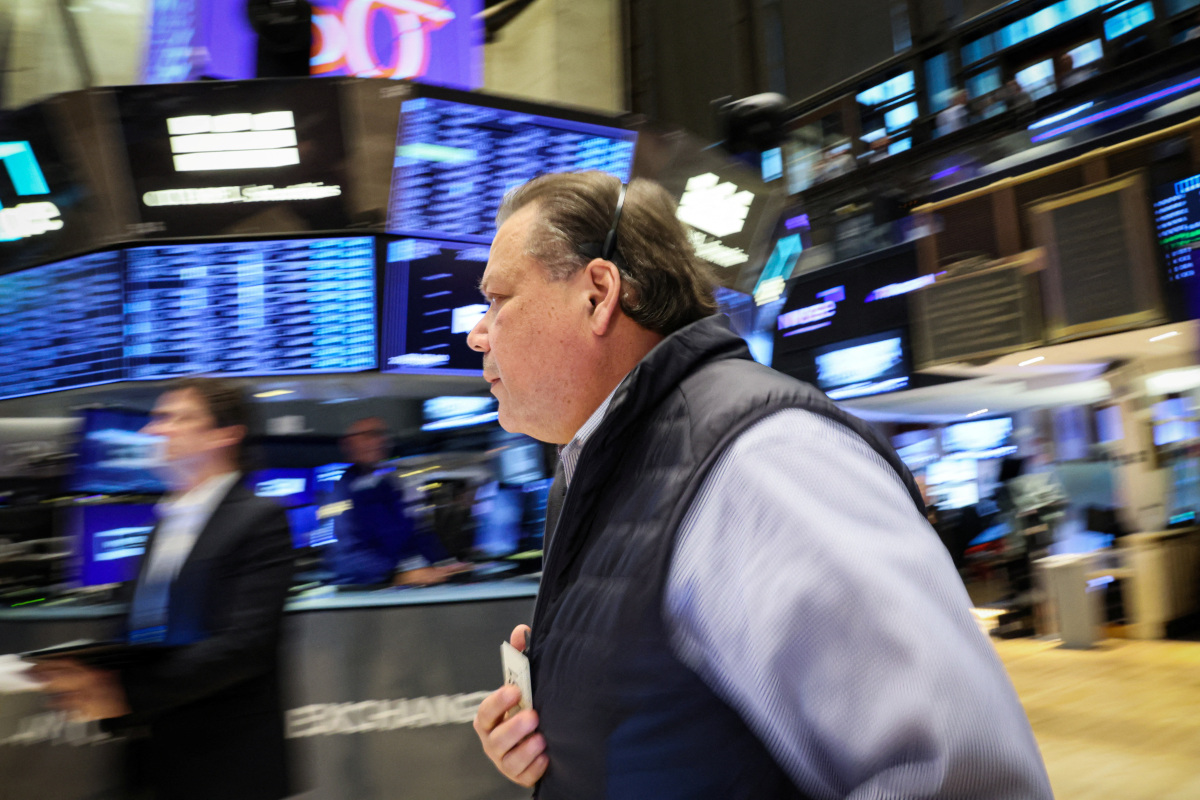
Stocks fell again on Thursday as oil prices and Treasury yields both climbed.
The S&P 500 lost 0.58 per cent and the Dow Jones Industrial Average 0.60 per cent. The Nasdaq Composite underperformed both, down 0.65 per cent. The benchmark ten-year Treasury yield topped 4.96 per cent.
Oil did the most moving. Brent crude gained almost 7 per cent by the close of the New York afternoon, passing 108 dollars a barrel.
Why fifty miles matters
The immediate cause was territorial. Iran-backed Houthi rebels took the port city of Mokha from the internationally recognised government on Thursday.
Mokha sits about fifty miles from the Bab el-Mandeb Strait, through which more than 12 per cent of global oil passes. That waterway has become considerably more important than usual, because several Gulf states have been routing through it while the Strait of Hormuz remains largely closed as a consequence of the war between the United States and Iran.
So the market is pricing a single tactical gain against a chokepoint that is already carrying more traffic than it was designed to absorb.
The scale of the gain is also notable in its own right. It is the largest Houthi advance since the 2022 truce that ended the country's civil war.
Several Gulf countries have resorted to Bab el-Mandeb while Hormuz remains largely closed
The diplomacy running alongside it
Saudi Arabia, which backs the government, has been striking the Houthis, who have in turn imposed an embargo on Saudi oil transiting the Red Sea and have hit energy infrastructure across the country.
Riyadh has also gone through an intermediary. Pakistan conveyed a Saudi warning to Iran, calling on Tehran to rein in the group before the crisis escalates further.
The other thing moving prices
Energy had already been rising on a separate report, and it concerns duration rather than territory.
President Trump and his advisers, including Vice President JD Vance and Secretary of State Marco Rubio, are reported to have discussed the possibility that the war continues past the end of his term, and that Tehran could keep resisting the blockade the administration has imposed.
That sits awkwardly beside what the President said publicly on Wednesday.
"War's going to end immediately after the election because they can't hold out any longer," he said, adding that oil prices would be tumbling downward right after the vote.
Markets, on Thursday's evidence, are pricing the private conversation rather than the public forecast.
Frankfurt moved too
Against that backdrop the European Central Bank raised rates on Thursday, explicitly noting that the war keeps putting pressure on prices.
The benchmark rate rises to 2.5 per cent from 2.25 per cent. The decision, the bank said, underscores the Governing Council's commitment to setting policy so that inflation stabilises at the 2 per cent target over the medium term.
Its baseline projections now run at 3 per cent this year, 2.5 per cent in 2027 and 2.1 per cent in 2028.
Core inflation is expected to be stickier: 2.5 per cent in 2026, 2.6 per cent in 2027 and 2.3 per cent in 2028. Against June's projections, the headline figure for 2026 is unchanged while the outer years have been revised upward.
That revision is the detail worth holding onto. A central bank raising rates while lifting its own forward inflation path is a bank that expects this to last.
Taken together, Thursday's moves describe one trade rather than several. Equities down, yields up and crude up is the pattern of a market repricing the duration of a supply shock rather than reacting to a single day's news from Yemen. A port changing hands is worth a few dollars a barrel. A port changing hands while the alternative route is closed, the fighting is expected to outlast an electoral cycle, and a central bank is revising its inflation path upward is worth considerably more than that.
More from Markets
UBS's Chief Executive Says the Calm in Markets Is the Thing to Worry About
Sergio Ermotti argues that volatility should be considerably higher given the state of the world, and that new risks keep arriving before old ones…
JPMorgan Has Upgraded Meta to Buy and Forecast Negative Free Cash Flow of 65 to 75 Billion
The bank sees roughly 30 per cent upside on the back of Meta's new AI agent, while modelling two consecutive years of cash burn on the infrastructure…
TSMC Now Holds 72.5 Per Cent of the Global Foundry Market, and August Was Its Best Month Ever
Revenue rose 53.3 per cent year on year while its nearest competitor holds under six per cent of a market on which the entire AI buildout now depends.