Five Regulators Rehearsed a Clearing House Failure, Then Published Four Sentences
Senior officials from five American and British financial authorities worked through the hypothetical resolution of a central counterparty on 3 September 2026, and the joint account they published eight days later names no attendee, records no finding and commits to nothing.
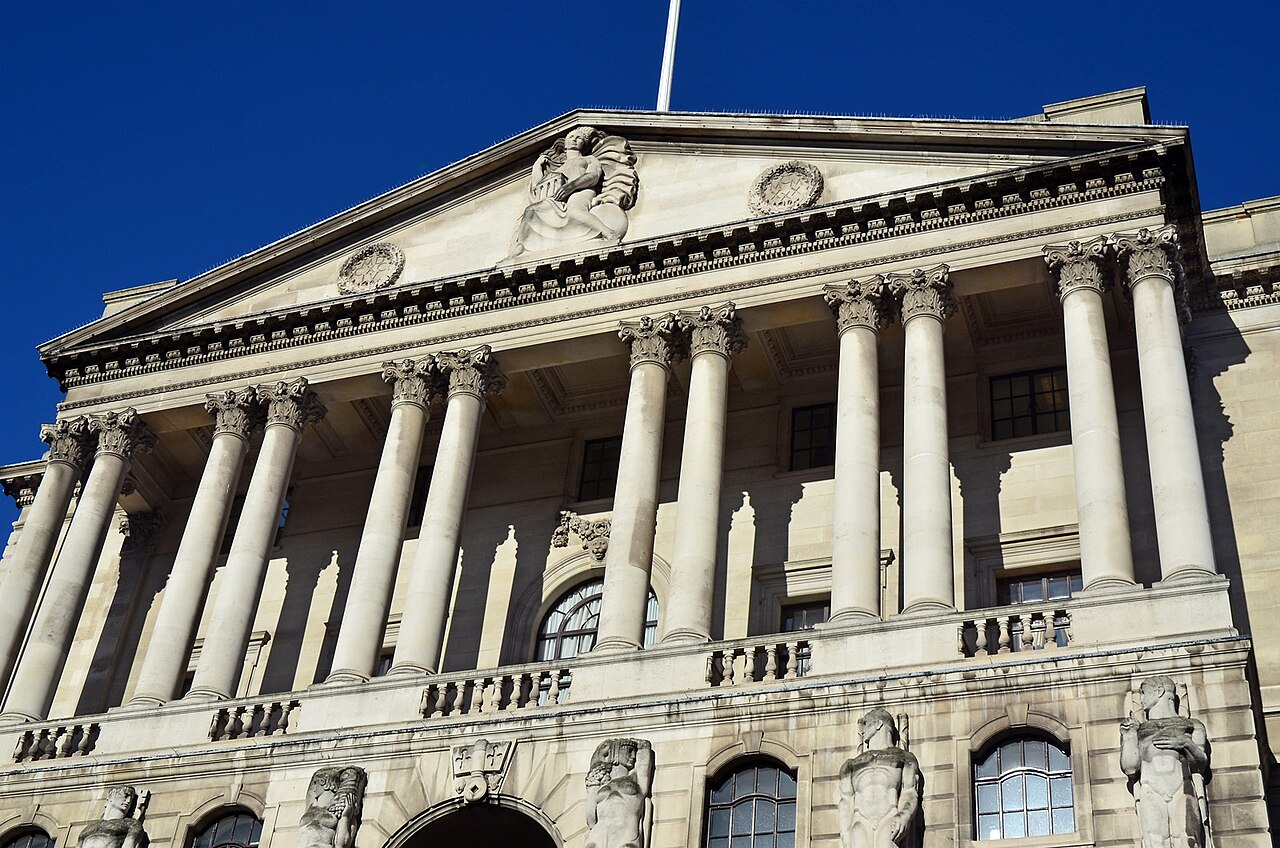
Officials from the Securities and Exchange Commission, the Federal Deposit Insurance Corporation, the Commodity Futures Trading Commission, the Federal Reserve Board and the Bank of England met on 3 September 2026 for a tabletop exercise on the hypothetical failure of a central counterparty. On 11 September a joint readout of that meeting was published. The Securities and Exchange Commission issued it as press release 2026-87; the Federal Deposit Insurance Corporation and the Commodity Futures Trading Commission issued their own versions the same day, and the American texts and the Bank of England text are identical in substance.
A central counterparty stands between the buyer and the seller of a financial contract, so that each side contracts with the clearing house rather than with the other. It collects margin, holds mutualised default fund contributions and manages the failure of a clearing member centrally. The Bank of England, which supervises the three recognised British clearing houses — ICE Clear Europe Ltd, LCH Ltd and LME Clear Ltd — says in its financial market infrastructure annual report for 2025-26 that UK CCPs "clear trillions of pounds worth of notional outstanding financial contracts each day". On the American side, the Financial Stability Oversight Council designated eight financial market utilities as systemically important under Title VIII of the Dodd-Frank Act on 18 July 2012, among them the Chicago Mercantile Exchange and the Options Clearing Corporation.
What the four sentences say
The readout runs to four sentences and no more. The first records the meeting: "Senior officials from the Securities and Exchange Commission, Federal Deposit Insurance Corporation, Commodity Futures Trading Commission, Federal Reserve Board, and Bank of England convened for a tabletop exercise on Sept. 3, 2026, to discuss certain issues relating to the hypothetical resolution of central counterparties (CCPs)."
The second places it in a sequence, describing it as "one of a regular series of senior-level meetings held since 2017 to share views on CCP resolution and review the progress of an ongoing program of joint work among the agencies". The third says the meeting was "an opportunity to review recent joint work undertaken by the agencies, in particular the information sharing and communications arrangements to support financial stability in the event of a CCP resolution". The fourth, the only forward-looking line in the document, says participants "acknowledged the importance of continuing to facilitate a dialogue between UK and U.S. authorities and continuing to share analyses and discussing policy formulation in relation to CCP resolution".
That is the whole of it. The document names not one participant. It says "senior officials" and stops there, without identifying which commissioner, which governor, which board member or which deputy governor was present, or how many people took part. The names printed at the foot of these releases belong to press officers, not to anyone in the room.
Nor does it describe the exercise. No clearing house is named, no loss type is identified, no size of hypothetical loss is given, and nothing is said about which resolution tools were tested. The readout records no finding, no gap, no lesson and no action agreed, and does not say whether the arrangements it reviewed were judged adequate. It sets no deadline, promises no deliverable and fixes no date for a further meeting.
The series used to disclose more
Earlier readouts in the same series were more specific about the work behind them. The readout of 25 June 2021 described "a review of UK and US legal frameworks for resolution and analysis of the rulebooks of major UK and US CCPs", and said the officials had considered "the potential systemic impacts and operational challenges that might result from the use of resolution powers". By 8 February 2022 the stated stage of the programme was the "development of detailed operational planning to support prototype resolution strategies for U.S. and UK CCPs". The 2026 text carries none of that detail.
Four meetings in the series can be dated from published readouts: 25 June 2021, 8 February 2022, 17 October 2023 and 3 September 2026. The gap between the last two is nearly three years, and whether meetings took place in between without a published account is not established. The readout traces the series to 2017 but cites no founding document, and no 2017 readout or joint statement establishing it has been located.
Neither His Majesty's Treasury nor the United States Department of the Treasury is named as a participant, in this readout or in the October 2023 one. That is a conspicuous absence on the British side, because the Bank of England exercises its CCP resolution powers jointly with the Treasury. Whether either finance ministry was present and simply not listed is not stated.
A consultation closed the day after
The exercise took place one day before the Bank of England's own consultation on how it would use those powers closed. The Bank published a discussion paper, "Central counterparty resolution: execution and resolvability outcomes", on 19 May 2026, and the consultation closed on 4 September 2026. The readout makes no reference to the paper, and the only established relationship between the two is the order of the dates.
The paper is the fuller statement of where British policy stands. The Bank has eight stabilisation options for a failing clearing house: transfer to a private sector purchaser, transfer to a bridge CCP, transfer of ownership, termination of clearing member contracts, cash calls on clearing members, reducing variation margin payments, writing down liabilities and securities, and taking control of the CCP. The regime under which it holds them took effect at the end of 2023. A clearing house, the Bank wrote, "must be capable of being 'resolved' in the unlikely event that it fails; that is to say, there is a feasible and credible way of managing a failure of a CCP without excessive disruption to the financial system".
The one substantive thing the readout claims to have reviewed is undefined. It refers to "information sharing and communications arrangements" without saying whether these are a memorandum of understanding, a protocol, a contact list or an informal practice, and no instrument of that kind specific to CCP resolution has been published. The two bilateral instruments that have been published cover supervision rather than resolution: a memorandum of understanding signed by the Commodity Futures Trading Commission and the Bank of England on 20 October 2020, and a joint statement of 14 April 2023 under which the Bank relies on the Commission's supervision of incoming American clearing houses.
The Federal Reserve Board is named in the readout as a participant, but a matching release does not appear in its 2026 press release index, where the other three American agencies each published one. Where the exercise was held, and whether it was conducted in person or remotely, is not stated either.
More from Markets
UBS's Chief Executive Says the Calm in Markets Is the Thing to Worry About
Sergio Ermotti argues that volatility should be considerably higher given the state of the world, and that new risks keep arriving before old ones…

Brent Gained Nearly Seven Per Cent After the Houthis Took a Port Fifty Miles From Bab el-Mandeb
Stocks fell and ten-year yields topped 4.96 per cent while the European Central Bank raised rates on the same day, citing the war as continuing…
JPMorgan Has Upgraded Meta to Buy and Forecast Negative Free Cash Flow of 65 to 75 Billion
The bank sees roughly 30 per cent upside on the back of Meta's new AI agent, while modelling two consecutive years of cash burn on the infrastructure…