The funding theory the consumer bureau argued, lost in two courts, and then stopped acting on
Ten months after telling a federal court it could not lawfully draw money from the Federal Reserve, the Consumer Financial Protection Bureau has requested and received three payments, and no appeals court has ruled on the statutory phrase at issue.
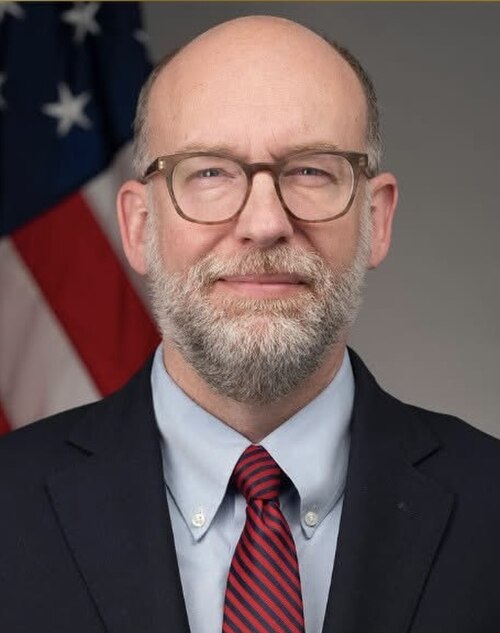
The Consumer Financial Protection Bureau has asked the Board of Governors of the Federal Reserve System for money three times since January, and each time it has been paid. It requested $145,000,000 on January 9, 2026, $75,800,000 on March 30, 2026, and $51,700,000 on July 28, 2026, according to the Bureau's published record of funds transfer requests. Each letter states that the sum named is larger than the Acting Director believes the agency needs and is provided to comply with a court order.
Ten months ago the Bureau's position was that it could lawfully draw nothing at all.
The opinion that started it
On November 7, 2025 the Justice Department's Office of Legal Counsel issued a 34-page memorandum opinion to the Acting Director of the Bureau, signed by T. Elliot Gaiser, the Assistant Attorney General who heads that office. It was written at the Acting Director's request. Its subject was the phrase "combined earnings of the Federal Reserve System" in the provision that funds the Bureau, 12 U.S.C. 5497(a)(1).
"We conclude that the 'combined earnings of the Federal Reserve System' refers to the Federal Reserve's profits, calculated by subtracting its interest expenses from its revenues. If the Federal Reserve has no profits, it cannot transfer money to the CFPB." — Office of Legal Counsel, memorandum opinion for the Acting Director, November 7, 2025
The opinion says the Federal Reserve was profitable every year from 1914 until 2022 and has run losses since, citing a net interest loss of just over $68 billion in the 2024 financial statements. The Director should seek an appropriation from Congress instead, it advised.
On November 10, 2025 the Bureau filed a notice in National Treasury Employees Union v. Vought in the District Court for the District of Columbia, attaching the opinion and saying it expected to exhaust its funds in early 2026, and announced the filing in a release the next day. On November 20 Russell Vought, the Acting Director, notified the President and Congress that the sums available under Dodd-Frank would not be sufficient for the 2026 fiscal year, resting that on the opinion.
What a district court held
The plaintiffs, who include the National Treasury Employees Union and the National Consumer Law Center, moved on November 23, 2025 to clarify the injunction already in force, saying the reading had never been adopted by the Bureau, by the Federal Reserve, or by any court.
Judge Amy Berman Jackson granted that motion on December 30, 2025 in a 32-page memorandum opinion and order. She held that the ordinary meaning of "earnings" is everything an entity takes in before expenses are subtracted, and that the defendants had given no coherent reason to displace it with a technical accounting sense. She reasoned that Congress had written "net earnings" elsewhere in the banking title, so the omission of "net" here was deliberate.
"Neither the statute, the injunction, nor the Fed's willingness to pay has changed; the only new circumstance is the administration's determination to eliminate an agency created by Congress with the stroke of pen, even while the matter is before the Court of Appeals." — Judge Amy Berman Jackson, memorandum opinion and order, December 30, 2025
The order clarified the injunction rather than modifying it, holding that declining to request funding contravened it.
The letters that followed
Ten days later the Bureau asked for money. Vought's letter of January 9, 2026 to Chairman Jerome H. Powell requested $145,000,000 for the second quarter of the 2026 fiscal year and said he disagreed with the December 30 order and was acting pursuant to it. The Federal Reserve's Chief Financial Officer, Rendell L. Jones, confirmed the funds were deposited at the Federal Reserve Bank of New York on January 13.
A second judge reached the same conclusion two months later. In Rise Economy v. Vought, Judge Edward J. Davila of the Northern District of California granted summary judgment for the plaintiffs on March 13, 2026.
"The Court finds Defendants acted arbitrarily, capriciously, and contrary to law by adopting the OLC Memo's statutory interpretation of 12 U.S.C. § 5497 and refusing to request funding from the Federal Reserve Board based on that interpretation." — Judge Edward J. Davila, order granting summary judgment, March 13, 2026
He ordered the defendants to keep requesting the amount the Director determines to be reasonably necessary, and refused a stay pending appeal.
The March 30 request was deposited on April 1 and acknowledged the next day; the July 28 request was deposited and acknowledged on July 31.
"This number does not reflect the amount that I believe to be reasonably necessary for the Bureau to perform its statutory functions. I believe that the Bureau can perform its statutory duties with a significantly smaller budget and provide the number above to comply with the referenced court order." — Russell T. Vought, Acting Director, letter of July 28, 2026
What has not been decided
Two district courts have rejected the reading of the statute and no court has adopted it. Neither the Court of Appeals for the District of Columbia Circuit nor the Supreme Court has ruled on what "combined earnings" means, so the question is unsettled in both directions: the opinion is not law, and the two district rulings are not a national answer.
A panel of the District of Columbia Circuit vacated the preliminary injunction on August 15, 2025; the full court granted rehearing en banc on December 17, 2025 and vacated that decision, leaving an earlier partial stay in force. On June 19, 2026 it denied the government's motion to modify the stay, granted a limited remand over a revised reduction-in-force plan, and held the appeal in abeyance. The docket shows no decision since, and no primary record here fixes the date the full court heard argument.
Other points remain open. The Justice Department asked the Federal Reserve on December 16, 2025 for its position on whether combined earnings were available; Judge Jackson ordered any reply docketed the day it arrived, and none appears through August 7, 2026. Whether the government appealed the March 13 judgment is not verified from a court record, and whether the opinion has been withdrawn or superseded is not established; it remains published. Nothing explains why the figures fell from $145,000,000 to $75,800,000 to $51,700,000.
Two details should not be read past the documents. The January and March letters are addressed to Chairman Jerome H. Powell and the July letter to Chairman Kevin Warsh; no primary document dates or explains that change of addressee. And the partial stay granted on July 10, 2026 turns on the confirmation of a new Bureau Director; no Senate record available here establishes whether that confirmation has taken place.
More from Law

Lindsay Clancy's Lawyer Asks Trump to Consider a Pardon, Which the President Cannot Grant
Kevin Reddington made the appeal in a television interview days after his client's murder trial ended in a hung jury, in a case being prosecuted by…

An Appeal Court Has Ruled That Calling Someone a Bad Boss Is Not Implying Abuse
Dan Schneider won the opening round against the producers of Quiet on Set, and a three-judge panel has now reversed that decision unanimously.
Three Clancy Jurors Have Described the Deliberations, and What the Holdout Said
The foreperson says the panel was never deciding whether Lindsay Clancy killed her children, but whether she knew it was wrong.