FTC moves to bar Beretta from putting its own people on Ruger's board
The proposed consent order does not stop the Italian gunmaker buying up to a quarter of its American rival, but it requires that whoever takes a seat on that board be independent of Beretta.
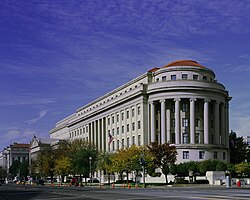
On 16 September 2026 the Federal Trade Commission issued an administrative complaint against Beretta Holding S.A. and accepted for public comment a proposed consent order settling it. The complaint alleges that a cooperation agreement Beretta signed with Sturm, Ruger & Company, Inc. on 2 May 2026 — which lets Beretta raise its Ruger stake to as much as 25% and obliges Ruger's board to seat two directors "sourced by" Beretta — would create an unlawful interlocking directorate under Section 8 of the Clayton Act, 15 U.S.C. § 19, and an unfair method of competition under Section 5 of the FTC Act, 15 U.S.C. § 45.
The vote was 2-0 on complaint File No. 261-0091, whose caption lists the Commission as two members, Chairman Andrew N. Ferguson and Mark R. Meador. An administrative complaint is issued on a "reason to believe" standard and is not a finding of liability, the FTC's press release says.
The sequence
The agreement replaced a proxy fight. Beretta gave notice on 24 February 2026 that it meant to nominate directors at Ruger's 2026 annual meeting, according to Ruger's Form 8-K filed 4 May 2026, and under the agreement dated 2 May it irrevocably withdrew that notice and ceased soliciting. The same filing caps Beretta at 10% of Ruger's voting securities, rising to 25% only once CFIUS approval and expiry of the Hart-Scott-Rodino waiting period are satisfied. Beretta's filings say those conditions were met before the offer, without giving dates.
Ruger took down its shareholder rights plan on the day the FTC acted, amending the Rights Agreement of 14 October 2025 to accelerate expiry from 13 October 2026 to the close of business that day — a step the cooperation agreement made a precondition of Beretta's tender obligation, its 8-K of 16 September 2026 says.
On 17 September, the day after the Commission acted, Beretta commenced a cash tender offer for up to 2,400,184 Ruger shares at $44.80 per share, its Schedule TO-T shows. The offer carries no financing condition and no minimum tender condition, and expires one minute after 11:59 p.m. New York time on 15 October 2026 unless extended — four days before the FTC's comment window closes. The consent agreement was published in the Federal Register at 91 FR 59134 on 18 September 2026, and comments close on 19 October 2026.
Fully subscribed, it leaves Beretta with about 24.95% of Ruger, its Schedule 13D/A of 17 September 2026 says; the FTC puts the transaction value at approximately $167 million.
The objection is the waiver
The complaint does not say the agreement ignored director independence. It says the independence the agreement requires can be waived. At paragraph 9 the Commission states that the agreement "permits the waiver of certain independence requirements," so that Beretta could nominate a Beretta person or someone otherwise not independent. Ruger's own 8-K describes the same mechanism from the other side: the Beretta directors must be independent of Ruger and, "unless the Board otherwise so permits," of Beretta and related persons.
The appointment itself is mandatory. The board "shall" seat the two directors within five business days of the later of the 2026 annual meeting and satisfaction of the regulatory conditions, the complaint says at paragraph 6. The seats are tied to ownership floors: 20% of the common stock for two directors, 15% for one. Liability does not turn on a Beretta employee taking one: the complaint says at paragraph 13 that placing an agent, deputy or representative on a competitor's board is enough.
The section, codified at 15 U.S.C. § 19, is self-executing and reaches only simultaneous service. Subsection (a)(1) reads:
"No person shall, at the same time, serve as a director or officer in any two corporations (other than banks, banking associations, and trust companies) that are— (A) engaged in whole or in part in commerce; and (B) by virtue of their business and location of operation, competitors, so that the elimination of competition by agreement between them would constitute a violation of any of the antitrust laws; if each of the corporations has capital, surplus, and undivided profits aggregating more than $10,000,000 as adjusted pursuant to paragraph (5) of this subsection."
Two thresholds gate the section, both indexed annually. For 2026 they are $54,402,000 under Section 8(a)(1) and $5,440,200 under Section 8(a)(2)(A), published in the Federal Register on 16 January 2026. Ruger's own securities filing concedes the overlap: the complaint quotes it at paragraph 3 saying "Ruger and Beretta compete in their firearms businesses."
What the order does
The proposed Decision and Order does not block the share purchase, require divestiture, or deny Beretta board representation. Paragraph II.A provides that Beretta "shall not, directly or indirectly, including through its parent, appoint, nominate, or otherwise cause any person to be appointed or nominated to serve on the board of directors of Ruger unless such person is an Independent Director."
Paragraph I.D excludes anyone who in the previous three years was an employee, officer, director, representative or agent of Beretta or its parent, Upifra S.A., or took compensation from them. Beretta must give the Commission 15 days' notice before causing anyone to join Ruger's board, and may not seek or receive Ruger's nonpublic information from a director appointed under the order. Compliance reports fall due at 30 and 90 days and then annually for five years.
The term is stated and not explained. Paragraph VII reads: "IT IS FURTHER ORDERED that this Order shall terminate 5 years from the date it is issued." Neither the order nor the analysis gives a reason for five years.
What is not established
Neither company has said anything on the record about the order. Beretta's 17 September press release announces the tender offer and does not mention the Commission or the complaint, and no Ruger statement responding to the order appears in its SEC filings. As of 21 September 2026 no Schedule 14D-9 from Ruger had been filed on EDGAR, so the board has not stated a position on the offer; the cooperation agreement obliges it only not to recommend against tendering.
Two details in the record do not line up. The FTC's analysis says Beretta already owns 9.96% of Ruger's shares, while Beretta's Schedule 13D/A puts the holding at 1,587,000 shares, or 9.93%, as of 15 July 2026; no document reconciles the two. Ruger's September 2026 filing gives its principal executive offices in Mayodan, North Carolina, while the FTC's order at paragraph I.B still carries the company's old Connecticut address.
No names have been filed for the two Beretta-sourced directors, and because the offer has no minimum tender condition, Beretta could finish below the floors that trigger the board rights. After the comment period the Commission will decide whether to withdraw, modify or make the order final.
More from Law

Lindsay Clancy's Lawyer Asks Trump to Consider a Pardon, Which the President Cannot Grant
Kevin Reddington made the appeal in a television interview days after his client's murder trial ended in a hung jury, in a case being prosecuted by…
An Appeal Court Has Ruled That Calling Someone a Bad Boss Is Not Implying Abuse
Dan Schneider won the opening round against the producers of Quiet on Set, and a three-judge panel has now reversed that decision unanimously.

Three Clancy Jurors Have Described the Deliberations, and What the Holdout Said
The foreperson says the panel was never deciding whether Lindsay Clancy killed her children, but whether she knew it was wrong.