Macron Wants the Screen Industries to Organise Before the Images Win
The French president has written that the world built a civilisation of images and should not sit back while it degrades, and he has convened a summit to do something about it.
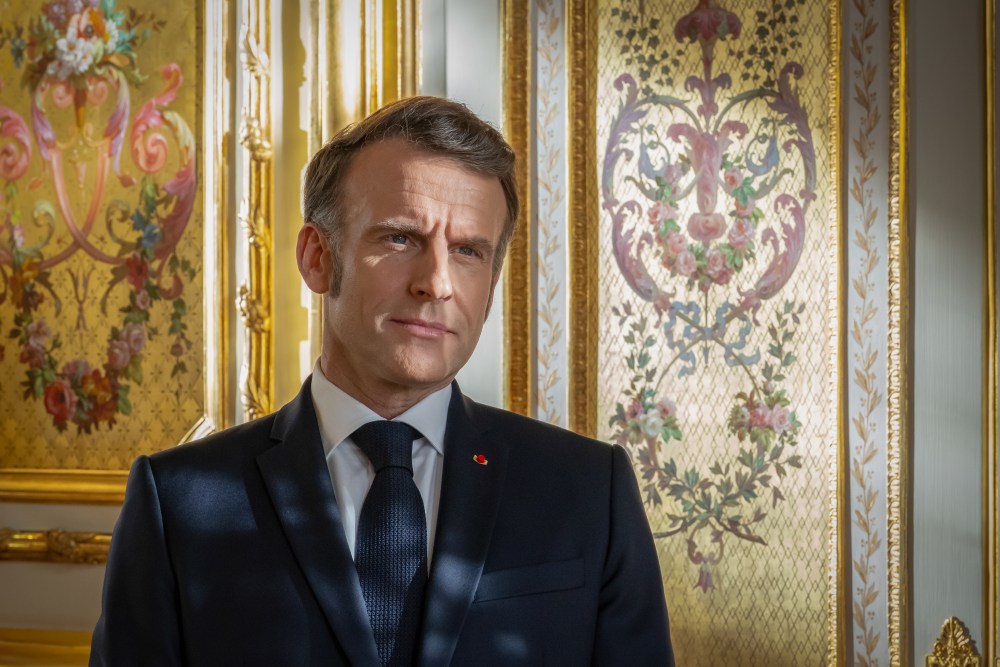
Emmanuel Macron has published an argument about screens on the eve of the Lumière Summit, which he is co-hosting with the South Korean president, Lee Jae Myung. The summit brings together global entertainment leaders around the future of cinema, television and gaming. The argument is that those three industries are the only thing standing between a civilisation of images and its decay.
He begins where France would begin. In 1895, in the basement of the Grand Café near the Paris Opera, ten short films were shown publicly, none of them longer than fifty seconds. Cinema existed from that evening onwards, and the Lumière brothers, Auguste and Louis, became the names attached to an art form that needs darkness in order to make light.
The complaint, and its unusual fairness
What follows is more careful than most political commentary on screens.
Macron does not argue that screens are the problem. He calls them neutral, and he is explicit about the gains: never before have so many people had access to so many films, ideas and cultures other than their own. A screen, he writes, can educate, connect and inspire.
The risk he identifies is volume. The rise of social media and what he calls the inflation of images, which some have described as a form of cognitive war. And he lists the symptoms in terms anyone will recognise. Parents worried about their children's attention. Teachers competing against a permanent flow of images. Artists wondering whether their work can still find an audience. Governments debating technologies that move faster than legislation.
Then the detail that gives the piece its credibility: the strange, universal experience of reaching for a screen for one reason and surfacing much later, having forgotten what it was.
We have never spent so much time in front of screens, and never so little time with the works these screens were built to carry
Responsibility, stated plainly
The passage doing the real work is short and unusual coming from a head of state.
We shaped this world, Macron writes, and we must take responsibility for it. But because we shaped it, we can reshape it.
The remedy he proposes is not withdrawal. Turning away from screens is not on offer and he does not pretend otherwise. The change has to happen on the screens themselves, which is why the summit is aimed at the industries that make things for them rather than at regulators who would restrict them.
Content against works
The distinction the whole argument rests on is between an endless supply of content and works that require time, talent, risk and intention to create.
His case for why the second category matters is not sentimental. A film, he writes, can send a new generation back to Homer. A series rooted in one language and one place can become a global conversation. A video game can ask you not merely to watch a world but to inhabit it.
That is a defence of cinema, television and gaming as the formats that still demand sustained attention, imagination and authorship, at a moment when almost nothing else on a screen does.
The economics are the point
The last movement is where the summit's purpose becomes clear, and it is a financing argument rather than a cultural one.
If the screen industries lose the capacity to finance ambitious work, to take risks on unfamiliar voices, and to sustain the institutions that carry that work to audiences, the consequences eventually appear on the screens themselves. There may be more images than ever, Macron writes, and fewer genuinely different things to see.
That is a precise description of what a market optimised for volume produces. It is also the reason a French president is co-hosting a summit with a South Korean one rather than legislating at home. France and South Korea are the two countries that have most aggressively defended domestic screen production against consolidation, and neither can do much alone against platforms that operate everywhere at once.
Calling it a new multilateralism across the creative industries is a deliberate borrowing from trade language, and the borrowing is the argument. Macron is treating cultural production as an industrial sector that requires coordinated protection, not as a matter of taste.
Whether the people arriving at the summit agree is the thing worth watching. Most of them run the platforms that made volume profitable.
More from Media & Influence

France Has Built an Emergency Service for Independent Cinemas and Signed Up Twenty Directors
IRIS is designed to intervene quickly when a cinema, distributor or nonprofit network is at risk, on the argument that exhibition cannot relocate the…

Aaron Rodgers Says the Sports Media Turned on Him Over Covid, and One Analyst Has Answered
The quarterback argues that people who were friendly stopped being friendly once he took a position, and the analyst he named says that was never…

A Co-Hosted Podcast Has Come Back With a New Co-Host, Six Weeks After the Hosts Disagreed
Sophie Cunningham's show returns under a new name with a basketball trainer in the second chair, and neither she nor West Wilson has explained the…