Aaron Rodgers Says the Sports Media Turned on Him Over Covid, and One Analyst Has Answered
The quarterback argues that people who were friendly stopped being friendly once he took a position, and the analyst he named says that was never what the criticism was about.
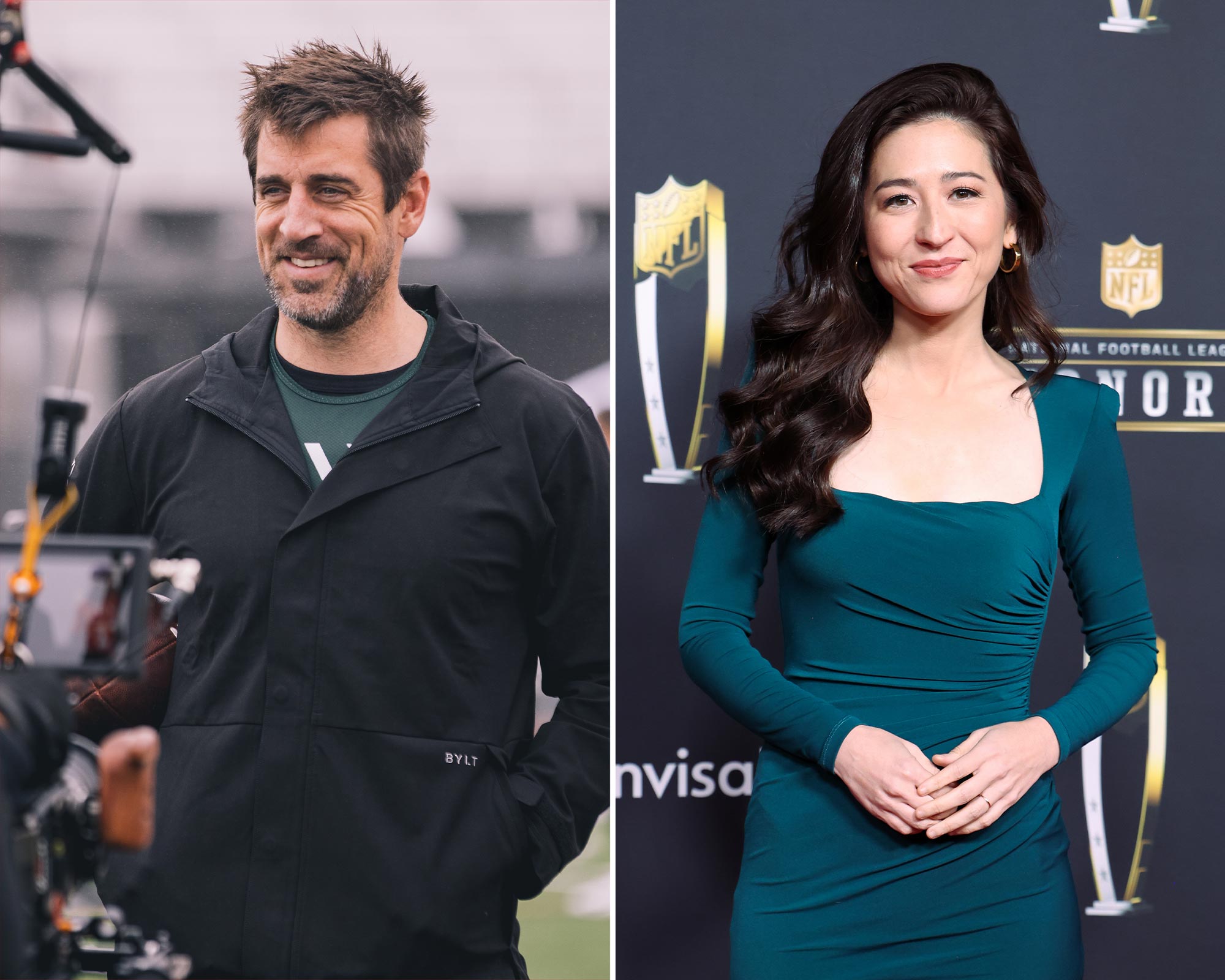
Aaron Rodgers has offered an account of why his relationships across sports media collapsed, and named one of them.
"Mina Kimes had me to her house for a feature that I did," Rodgers, 42, said on the Not Just Football podcast on Thursday, September 10. "All these people were my friends in the media until I came out against COVID."
The 2021 sequence
The events underneath this are a matter of record and not in dispute.
In 2021, Rodgers was asked at a press conference about his vaccination status and said he was immunized. Three months later he tested positive for Covid-19 and acknowledged he had not been vaccinated.
His explanation now is that the wording was deliberate and load-bearing.
"When I said I was immunized, it was because that statement alone was the crux of my entire argument and ongoing appeal with the NFL around my vaccination status," he said.
He went on to describe what he saw as hypocrisy in how unvaccinated players were handled, saying they were treated as second-class citizens around the facility and restricted on the road, and dismissing the distancing rules in blunt terms.
All they can say is, oh well, you lied about it
His argument about the argument
The more revealing passage is what he says about how the criticism has been conducted.
"Now after everything that's come out, all they can say is, oh well, you lied about it," he said. "When someone has an argument and all they can ever say is, they attack your character instead of what you're actually saying, you know that you're actually on the right side of things."
That is a specific rhetorical claim: that character criticism indicates the substance is unanswerable.
It only holds if the character point is a deflection from the substance. Where the disputed conduct is itself a statement, the two are not separable, which is precisely the ground his critics have occupied.
Kimes has responded
Kimes, 41, addressed his Covid history this week, before the podcast aired, having watched him raise it himself during an appearance last month in which he called Dr Anthony Fauci a coward.
"It was interesting to see him rehash, I mean, he's been doing this for a while, the COVID stuff," she said on Tuesday, September 8. "He clearly was very bothered by the criticism."
She then drew the distinction that answers his complaint directly.
"I was someone who was critical of him. But I wasn't critical, and I think a lot of people, that he wasn't vaccinated, the criticism was that he lied about it by omission or whatever."
The comparison that settles it
Kimes's strongest point is not an argument but an example, and it is difficult to get around.
She contrasted Rodgers with Kirk Cousins, now at the Las Vegas Raiders, who has also said he was unvaccinated.
Cousins, she noted, drew relatively little criticism and appears to have moved on entirely, untroubled by it.
Two quarterbacks, the same vaccination status, two completely different outcomes. If the media reaction had been driven by the position, as Rodgers argues, Cousins would have received the same treatment.
What separated them was not the choice. It was the press conference, and a word chosen because it would survive a hearing.
There is a second thing the comparison exposes, which is about how long this has run. Cousins answered the question, absorbed whatever came, and the story ended. Rodgers is still relitigating it five years later, on podcasts, by name, and the persistence is doing more to keep the episode alive than any analyst could. Kimes noted as much almost in passing: he has been doing this for a while, and he clearly was very bothered by the criticism.
More from Media & Influence

France Has Built an Emergency Service for Independent Cinemas and Signed Up Twenty Directors
IRIS is designed to intervene quickly when a cinema, distributor or nonprofit network is at risk, on the argument that exhibition cannot relocate the…
A Co-Hosted Podcast Has Come Back With a New Co-Host, Six Weeks After the Hosts Disagreed
Sophie Cunningham's show returns under a new name with a basketball trainer in the second chair, and neither she nor West Wilson has explained the…
The Executive Who Built NBC News Now Is Leaving, Eleven Months After Being Layered
Janelle Rodriguez launched the streaming service and handled the Nightly News succession, then spent a year reporting to somebody who had not…