He Studied AI in 1986. Now He's Putting Robots to Work in Malaysia
Ahmad Moradi's decades-long fascination with AI has led him from streaming to industrial acquisitions and an ambitious airport robotics project.
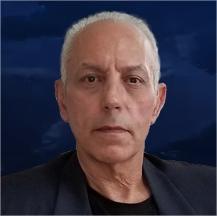
Why One Founder Thinks of Acquisitions as Pearls
Most founders collect companies the way people collect trophies, one at a time and mostly for show. Ahmad Moradi thinks in strands. Each business he adds becomes a pearl on a string, and the string only has value if every pearl strengthens the one beside it. He calls it pearl-string theory, and he has spent the years since turning it into an operating plan with eighteen units. The ambition is large and the logic is plain: buy well, build, and let artificial intelligence do the stitching. How did a streaming veteran end up here?
Moradi is the founder, chairman and CEO of METAXCHANGE.AI INC, a company organized around what he calls an industrial rollup paired with AI digital transformation. The idea is easy to say and hard to execute. Acquire established businesses in sectors such as wholesale, logistics and manufacturing, then build the intelligence layer that helps them operate faster and serve customers better. Buy and build, in his own shorthand.
He describes himself as an Algomist and a knowledge engineer, titles that reflect a career spent where algorithms meet practical use. His temperament is just as clear. He says he leads and never follows, and that he would rather create an environment where wealth gets built than wait for someone else’s template. He also holds one belief steady through every pivot: AI should serve humanity, and the humans should stay in the picture. Readers can follow his thinking and connect with him directly on LinkedIn.
The numbers he puts behind the plan are bold. He projects annual recurring revenue of $120 million by the close of fiscal year 2027. Whether that figure holds is a question for the market, but the structure behind it is concrete, and the rest of the story explains how he got there.
From Pandemic Broadcasts to Boardrooms: The Long Education of an Algomist
The story starts in 1986, when Moradi began studying artificial intelligence. That is decades before the technology became a dinner-table topic. Even then, he says, he believed it should work for people and not the other way around. That conviction has outlasted several waves of hype.
His career took an unexpected turn through the media. For twenty-six years, he worked in streaming, and he describes his role in a way that explains his later work. He was a story maker, the person who connected storytellers with the people who wanted to watch. The job meant building the pipes that carry a live moment from a stadium or studio to a screen in someone’s living room.
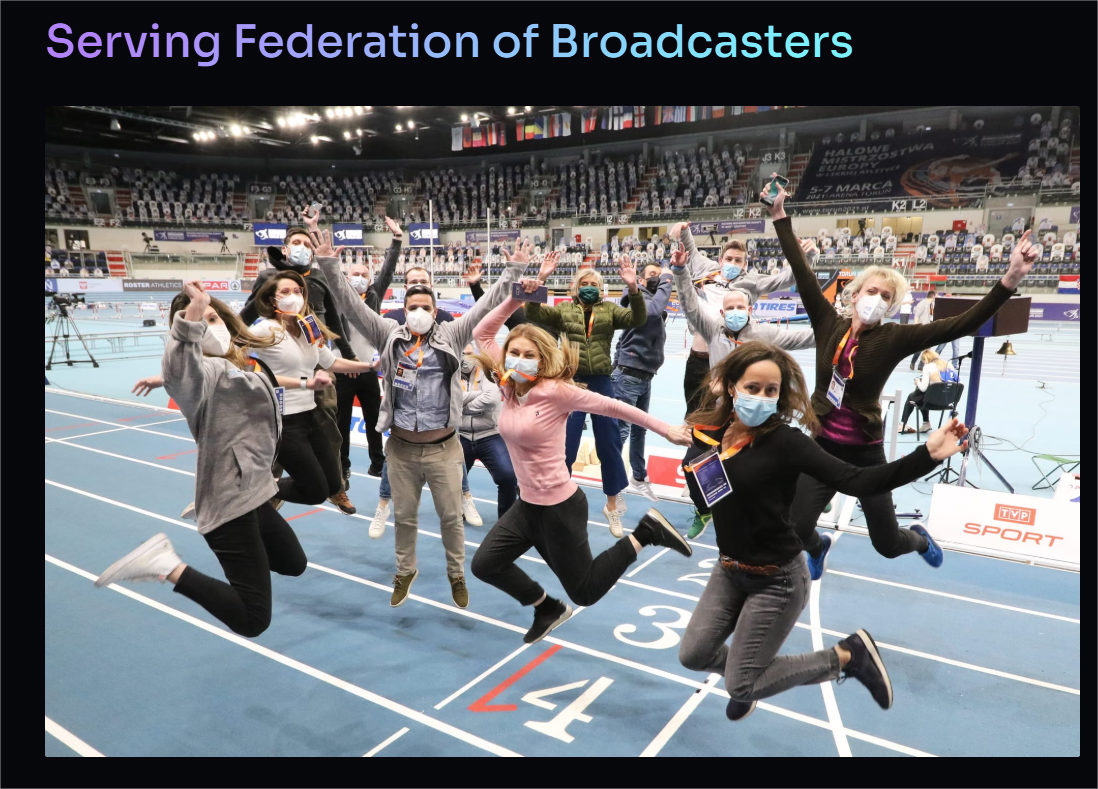
That work reached a high-stakes moment during COVID-19. Through his company NETSTAIRS, Moradi served the European Broadcasting Union and European Athletics while audiences were locked at home and live events were scarce. Sport and shared spectacle suddenly mattered more, and the infrastructure behind them had to hold. NETSTAIRS published its own account of the work, including a claim that it helped lift television viewership by nearly 20 percent.
Not every product along the way survived. Moradi is candid that as a visionary he has built many product lifecycles, and some became industry trends while others faded into the background. He treats that as the cost of thinking outside the box. An entrepreneurial instinct, in his view, means accepting that some experiments will not last, while still paying attention to creating wealth for stakeholders.
That attention led him to the AICPA, where he earned an ESG Certificate of Completion. Most executives would have stopped at the standard framework of environmental, social and governance factors. Moradi added two more, sustainability and growth, and calls the result ESG2. In his reading, a company that cannot sustain itself or grow does not do much for the other three. He treats the two additions as the foundation.
His working creed fits in a single breath: good thoughts, good code, good intent. It is a simple line, but he has applied it consistently, from broadcast engineering to boardroom strategy. Through MAXWELL RAND, a long-running wealth strategy firm, he has also kept one foot in the financial side of the business, which gives his technology work a dealmaker’s discipline.
Eighteen Units, One Network and a Robot at the Airport
Today, METAXCHANGE.AI INC is made up of eighteen operating units. Each is meant to deliver a basket of ten-times growth potential, and each is designed to run on a planned AI content delivery network, the shared infrastructure that serves outside clients as well as the company’s own subsidiaries. That is the pearl string in practice. A new unit does not sit alone. It plugs into the network, strengthens it, and in turn becomes stronger.
For investors, that structure is the pitch, and the company’s investor relations page lays out the full case. Moradi’s primary audience includes accredited investors, family offices, private equity firms, investment bankers, wealth managers, banks and asset-based lenders. His second audience is the operating world of wholesale, logistics and manufacturing, businesses that could benefit from digital transformation but may not have the tools or time to build it. The shared message to both groups is that industrial rollup and AI can reinforce each other.
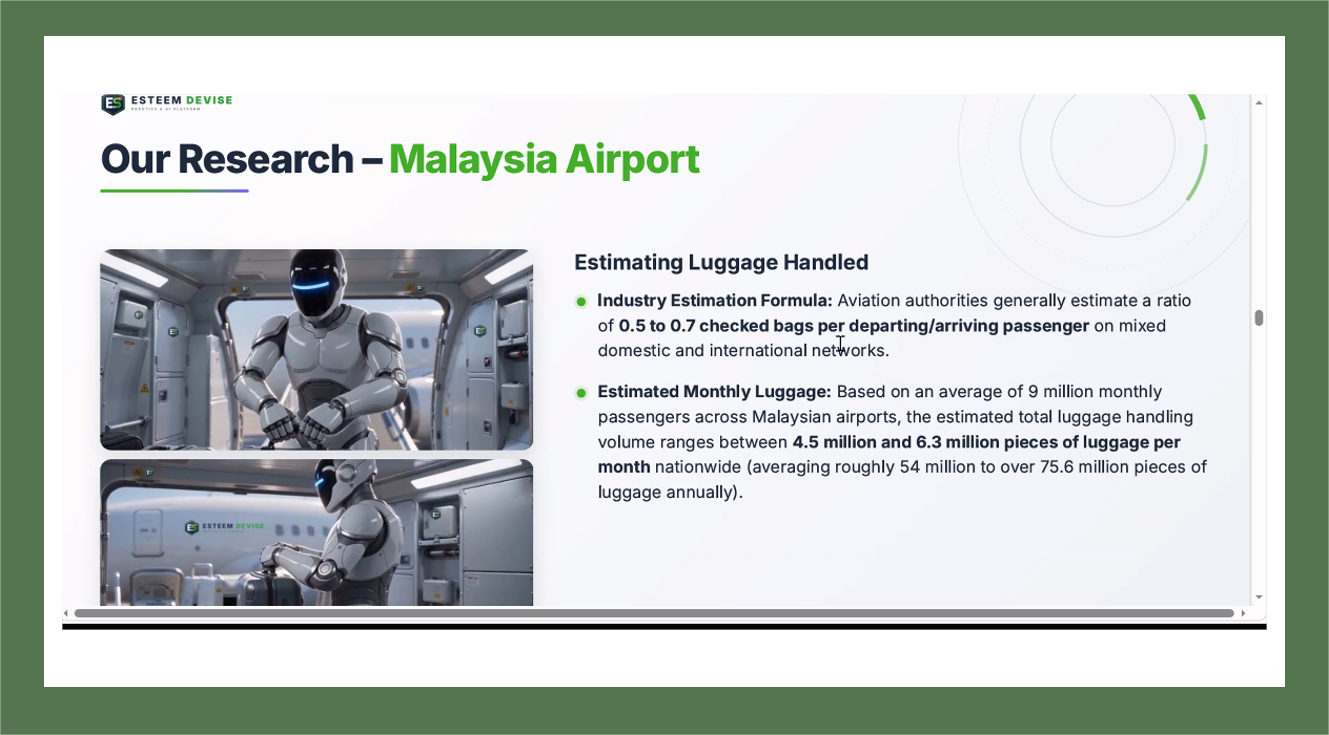
The most visible test may arrive in Malaysia. METAXCHANGE AI plans to launch its first AI robots as luggage handlers there, and Moradi is careful to describe the project as an experiment. The robots will connect to a secured AI content delivery platform supplied by NETSTAIRS. The goals are specific: improve passenger privacy and security, and make luggage inspection and handling more reliable. Several of the group’s operating units are contributing to the effort. Progress on the pilot can be followed on the MXCG YouTube Channel.
It is a fitting first public showcase. Luggage handling is physical, repetitive and security-sensitive, and it touches millions of travelers. If the pilot works, it would show what Moradi means by balancing humanity with AI agents and robots. People stay at the center, and the machines take on the work that wears them down.
That balance is the thread running from a 1986 student of AI to a chairman with eighteen units and a robot pilot on the way. He built infrastructure for stories, then turned to infrastructure for industry. The next question, as he sees it, is which business becomes the next pearl.
More from Tech
Fred Anthony on Building AI That Learns From Experience
The technology executive and Surely Networks co-founder draws on hands-on engineering experience to explore AI that learns from evidence while…
PlayStation Cancelled Kojima's Next Game in June and Xbox Has Picked It Up
Physint moves to Microsoft after three decades of work between Hideo Kojima and Sony, and the new deal extends into film and television.

Fewer Than One in Ten Enterprise Applications Is Fully Observable, and Agents Are Now Writing the Code
Missing visibility used to slow human teams down, but agents now deploy at machine speed into estates that nobody can fully see, which turns a cost…