Building Something Great Is Hard. Jon Small Chose the Part That’s Harder
From a Music Stand to a $200 Million Exit

The Sail Behind Edtech's Best Ideas
Every founder knows the feeling. The idea arrives, the engineers build, the prototype finally works, and for a moment it seems the difficult part is over. It is not. Building a great education product is hard. Dreaming it up, in a field this technical, is harder than most people admit. But nothing, according to Jon Small, is harder than the stretch that comes next: getting that product into the hands of the schools, colleges, and learners who need it.
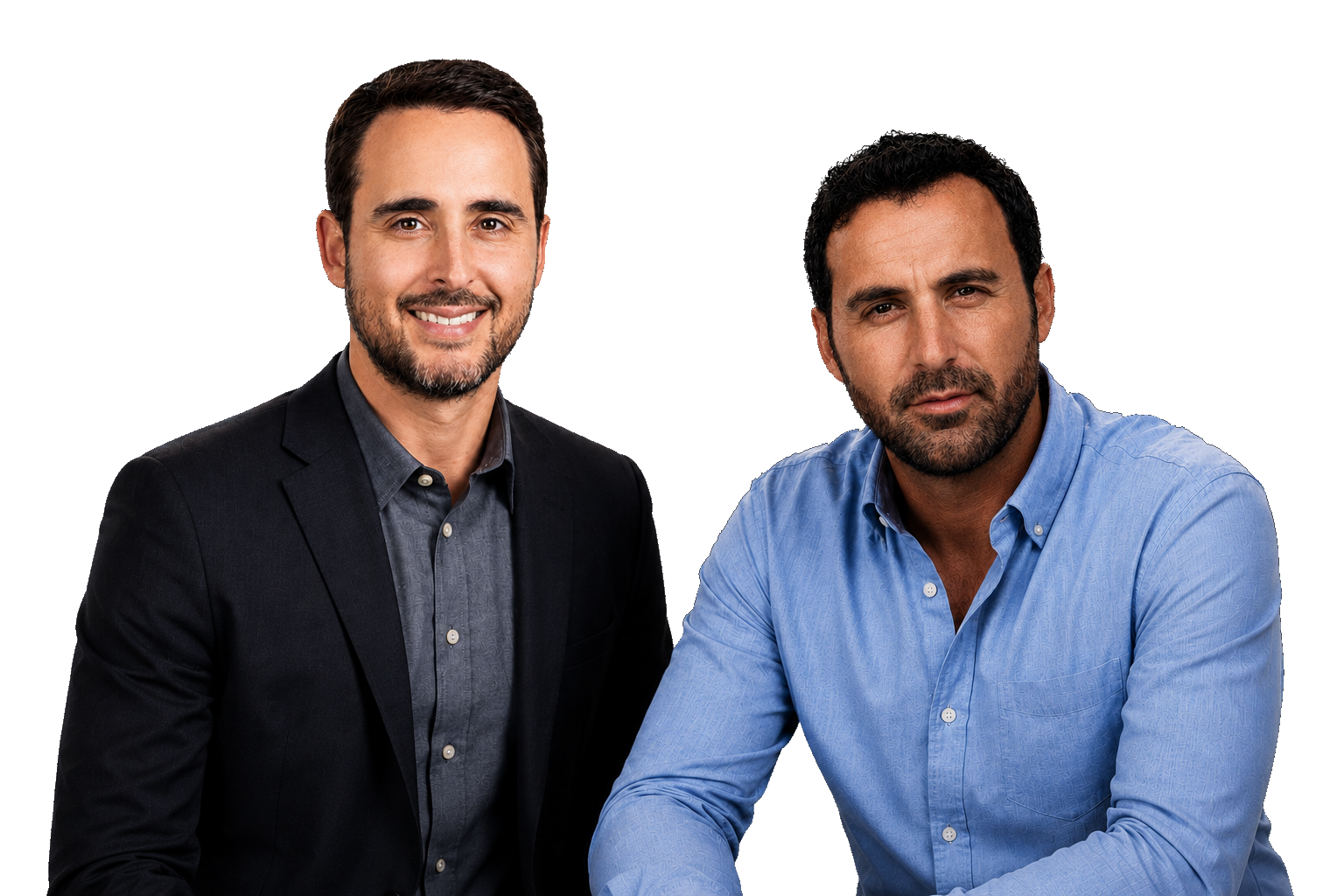
Jon Small is the co-founder and CEO of EdSails, a go-to-market firm for education technology that he runs alongside his longtime partner, Eric Hoffman. Between them, they have spent decades in the sales leadership seats of edtech, across K-12, higher education, career and technical education, early childhood, and nonprofits. They have generated hundreds of millions of dollars in revenue and supported four founder exits. They are operators rather than advisors, which is a distinction Small makes without any swagger, and one that shapes everything about how EdSails works.
The name itself carries the philosophy. While working together at an edtech startup, the pair heard a piece of advice from a lead investor that never left them: in the startup world, be a sail, not an anchor. Be the force that catches the wind and moves a founder forward. Great products deserve great sales execution, and that is the work EdSails exists to do.
From a Music Stand to a $200 Million Exit
Small's route into edtech was not a straight line. He was first trained in music, and only after earning his master's degree did he turn toward education technology. That was more than fifteen years ago. Since then, his career has read like a field guide to the sector's defining moments.
He rose from VP of Sales to President at Revolution Prep, where he and Eric first met. The business they inherited was stagnant, earning less than $10 million. Together they turned it into a cash-flow-positive company above $25 million, and Apax Partners later acquired it for $200 million. The tool behind the turnaround was a technique the two of them invented, called Move Measure Multiply, which they have since proven across categories within education.
The pattern held elsewhere. At Varsity Tutors, which became Nerdy, Small launched two startup divisions that produced nearly $10 million combined in their first year, and he helped carry the company's valuation from $400 million to $1.7 billion through its IPO. He served as CEO of StudyPoint, another company that was acquired. Along the way he delivered 30 percent or better annual growth for seven consecutive years and advised a string of early-stage edtech ventures.
Such a record might suggest a straightforward climb. Small describes it differently. Turning around a business that has stopped moving means doing the unglamorous work: measuring what is real, fixing what is broken, and repeating what works. That habit, more than any single deal, is what he and Eric carried into EdSails.
There is also a lesson tucked inside the origin story. Eric and Small did not set out to build a firm. Industry contacts kept asking them to help market new products, and the requests were frequent enough that a company became the sensible answer. Then something unexpected happened. They assumed they would need to advertise themselves. They never did. Clients arrived quickly, and the pair spent every hour marketing their clients' brands instead of their own. Inquiries still come in faster than they can accept them, and they regularly turn people away. A go-to-market firm that has never found the time to go to market itself is, as Small might put it, a fair proof of concept.
Small by Design, Growing on Purpose
Today, EdSails works with an unusually wide range of brands, from software for mathematical notation used by college professors and backed by NVIDIA to a nonprofit that brings mindfulness to school children. What unites them is the need for what Small calls the hardest part of the job.
The firm's argument rests on an idea borrowed from Dan Heath's book Reset: How to Change What's Not Working. You trade away a task you would pay someone else to do, and take on one that someone else would pay you to do, because each of you is better at the thing you love. Go-to-market is exactly that kind of function. Founders have little reason to master it on the side when specialists who live it, breathe it, and care about it deeply are available. A capitalist economy, after all, is largely a mechanism for finding the person who does what you need done.
How EdSails does the work is as notable as what it does. Every customer interaction is handled personally by Small or Hoffman, and it is never delegated. Operational support behind the scenes lets them serve several brands at once, but the conversations with customers stay sacrosanct. The team works directly inside the client's CRM, email, and sales systems, under the client's own brand, so the relationships built belong to the client and the data is theirs to evaluate. No separate reporting layer is needed because nothing is hidden.
The commercial terms follow the same logic. EdSails earns commission only on revenue that is actually collected, so its fortunes rise and fall with its clients'. Engagements run month to month, which means clients stay because the relationship creates value, not because a contract demands it. The firm's guiding belief is that a company's success should be measured by the value it creates for others. Profit is necessary to sustain the mission, but it is not the mission.
That ethic extends inward. Employees share in quarterly profits whenever the company has a surplus, and the team enjoys generous holidays and vacations. The firm offers discounts to the military and to nonprofits, and runs a college intern program that shows the next generation how to bring new products to market and build a business with values intact.
Growth, meanwhile, has arrived sooner than planned. Small and Hoffman once imagined running EdSails for many years and perhaps passing it on as a family business. Demand has pushed them faster. They have begun hiring full-time employees and restructuring the operation so the right number of brands can be served at once. In the years ahead, they expect that careful expansion to continue, whether linear or exponential, with the two of them remaining the leaders and primary service providers while building a small company anchored by loyal people.
For edtech founders with a product they believe in, the pitch is quiet and t he promise is plain: the wind is there, and a sail can help you catch it.
To learn more, visit EdSails, read the About page, connect with Jon Small on LinkedIn, or hear Jon and Eric discuss how AI is changing edtech sales on the Brainiac Blueprint podcast.
More from Business

A Mortgage Holding Company Says the Industry Digitised the Paperwork and Left the Work Alone
Swish Holdings argues that twenty years of lending technology turned documents into PDFs without removing a single step, and it is building a stack…

There Is 45 Billion Dollars of Demand for Climate Resilience and Almost Nothing to Sell Into It
Insurers have been pricing this risk with real money for years, and the money that arrives after a disaster is still structured to rebuild exactly…

The Shoebox That Built Austin’s Most Trusted Eyelid Surgeon
Fellowship-trained, a five-time Super Doctor and fiercely kind: how Dr. Malena Amato turned a family shoebox lesson into Austin’s most talked-about…